
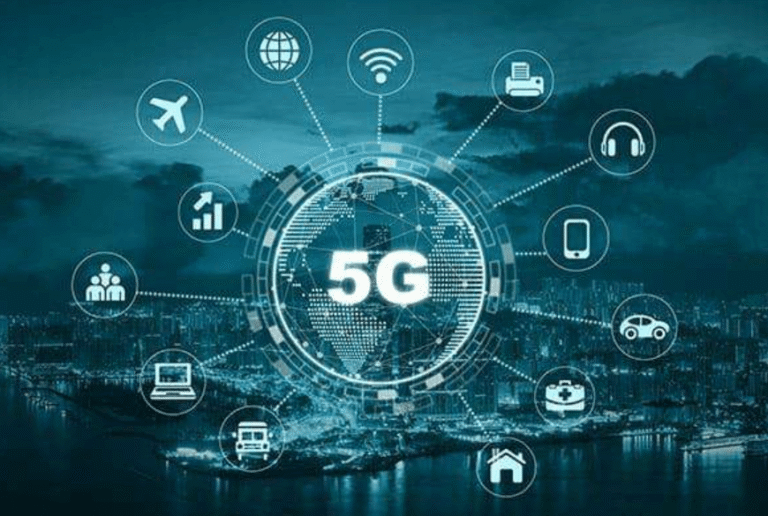
The advent of 5G technology marks a significant evolution in connectivity, characterized by enhanced speed and reliability. Its influence extends across various sectors, facilitating real-time data exchange and operational efficiency. This technological advancement not only supports innovative applications but also catalyzes transformations in urban infrastructure and healthcare delivery. As industries adapt to these shifts, the implications of 5G on digital transformation warrant closer examination, particularly in how it reshapes future interactions and processes.
Revolutionizing Communication: The Speed and Reliability of 5G
As 5G technology continues to be deployed globally, its transformative effects on communication become increasingly evident.
Enhanced speed and reliability facilitate seamless wireless gaming experiences, allowing users to engage without latency.
Additionally, 5G’s low-latency capabilities are crucial for the operation of autonomous vehicles, enabling real-time data exchange and decision-making.
This technological revolution empowers individuals, fostering a future where connectivity enhances freedom and innovation.
See also: The Future of Autonomous Vehicles: What’s Next?
Enabling Smart Cities: How 5G Fuels Urban Innovation
The deployment of 5G technology is not only reshaping communication but also laying the groundwork for the evolution of smart cities.
By enabling smart transportation systems, 5G enhances real-time data exchange, optimizing traffic flow and reducing congestion.
Moreover, its capabilities foster urban sustainability initiatives, allowing cities to implement efficient energy management and resource allocation, ultimately creating more resilient and innovative urban environments.
Transforming Healthcare: The Role of 5G in Telemedicine
While traditional healthcare systems often face limitations in accessibility and efficiency, the advent of 5G technology has the potential to revolutionize telemedicine.
Enhanced bandwidth and reduced latency enable seamless virtual consultations and real-time remote monitoring.
This connectivity fosters improved patient outcomes, expands access to specialized care, and empowers individuals to manage their health more effectively, ultimately transforming the healthcare landscape.
Empowering Businesses: Efficiency and Growth in the 5G Era
With the integration of 5G technology, businesses are poised to experience unprecedented levels of efficiency and growth.
Enhanced bandwidth and reduced latency facilitate seamless remote collaboration, empowering teams to innovate and respond swiftly to market demands.
Moreover, 5G optimizes supply chain processes, enabling real-time data exchange and automation, which ultimately drives competitiveness and fosters a dynamic business environment in the digital era.
Conclusion
In conclusion, 5G stands as the backbone of a digital renaissance, propelling connectivity and innovation across multiple sectors. Its unparalleled speed and reliability not only enhance communication but also ignite transformative changes in smart cities, healthcare, and business operations. As organizations harness the potential of 5G, they unlock new realms of efficiency and collaboration, navigating the complexities of a rapidly evolving digital landscape. Ultimately, 5G is not merely a technology; it is a catalyst for a future replete with possibilities.